It’s tough to be a Bitcoin miner these days.
Global political unrest as well as a huge surge in demand for AI-associated data centers have driven energy prices higher.
And we all know that mining profitability hinges on affordable energy.
Meanwhile, Bitcoin mining difficulty has not eased up.
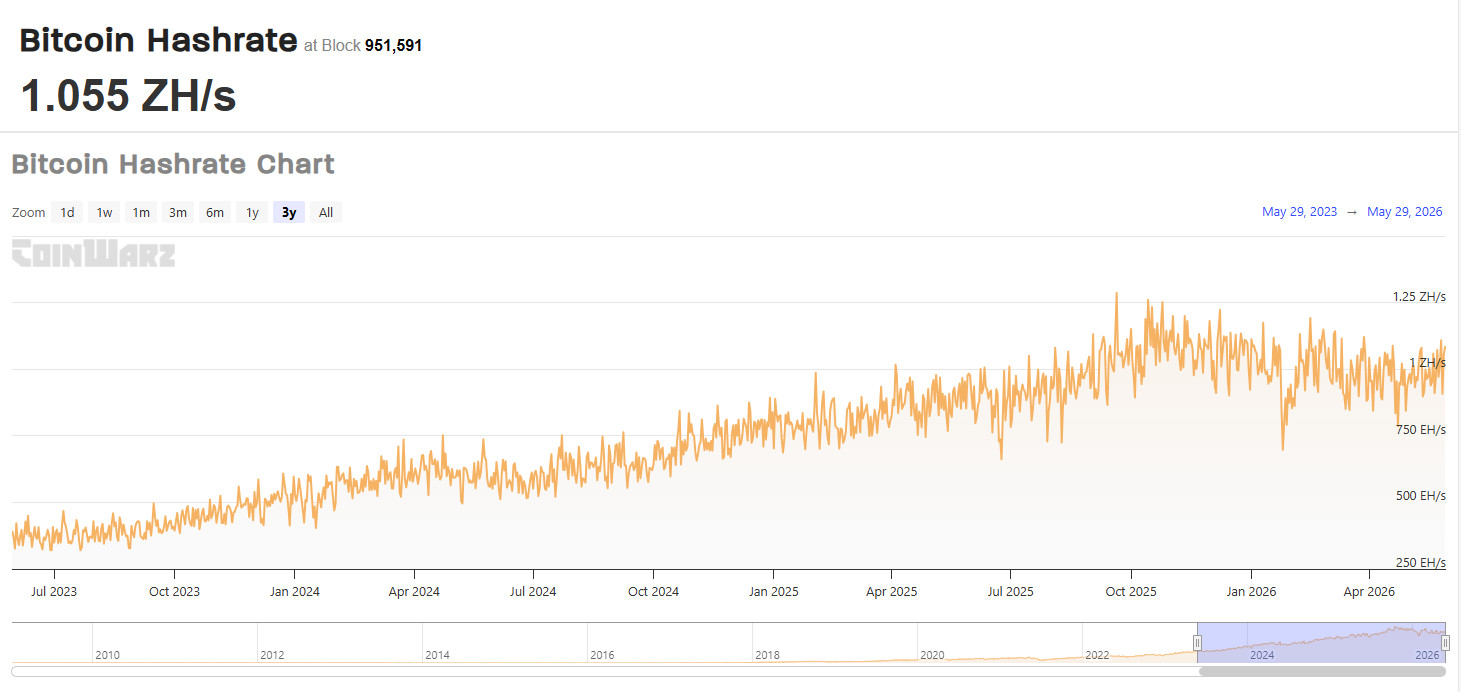
Looking at the 3 year hashrate, it is not at an all-time high, but it has remained roughly stable since the Fall of 2025.
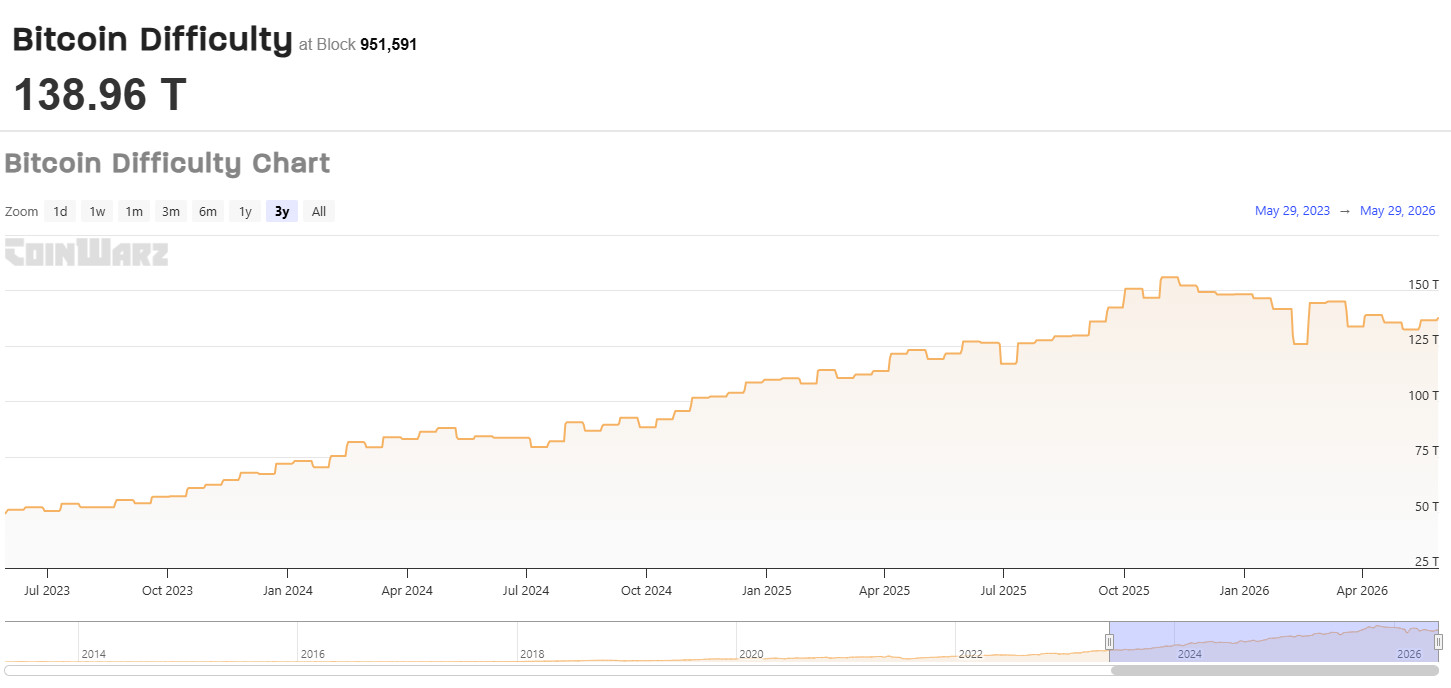
And looking at the 3 year difficulty chart, it basically mimics the hashrate. Not at an all-time high, but roughly where it was in late 2025.
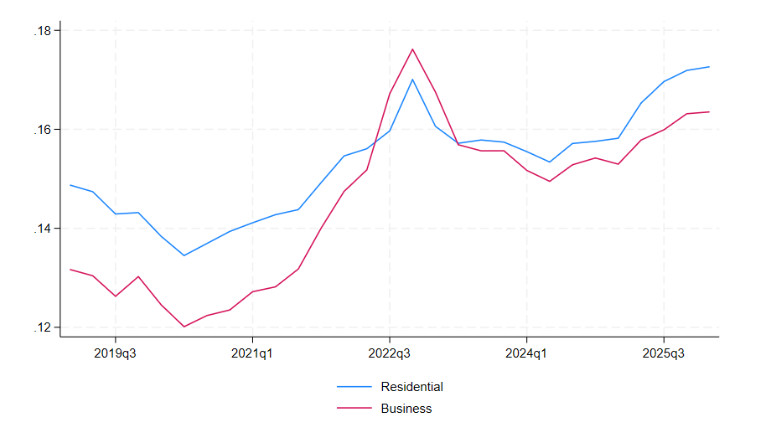
This chart shows global energy prices in USD per KWh. Not a pretty picture for commercial or residential miners.
At the same time, Bitcoin’s market cap has grown, and it seems to be the crypto currency that is the closest to becoming mainstream. It’s price performance hasn’t been great lately, but some would regard it as the safest and least volatile, relatively speaking.
So if mining Bitcoin isn’t profitable, is there a better way to go about it?
Is there a way to mine Bitcoin indirectly?
One option is to mine the coin of your choice, and then exchange it for Bitcoin.
This can be done fairly easily, at least for some coins. And for fairly low fees.
Exchanging ZEC for BTC
When I mine ZEC, I routinely leave some of my holdings in my ZEC wallet, but then exchange some of them for Bitcoin to diversify my crypto portfolio.
Lately, I’ve been using Flashift.app. The process is simple, but there are a few steps. Let me see if I can outline them:
1. I go to the exchange area on Flashift – https://exchange.flashift.app/
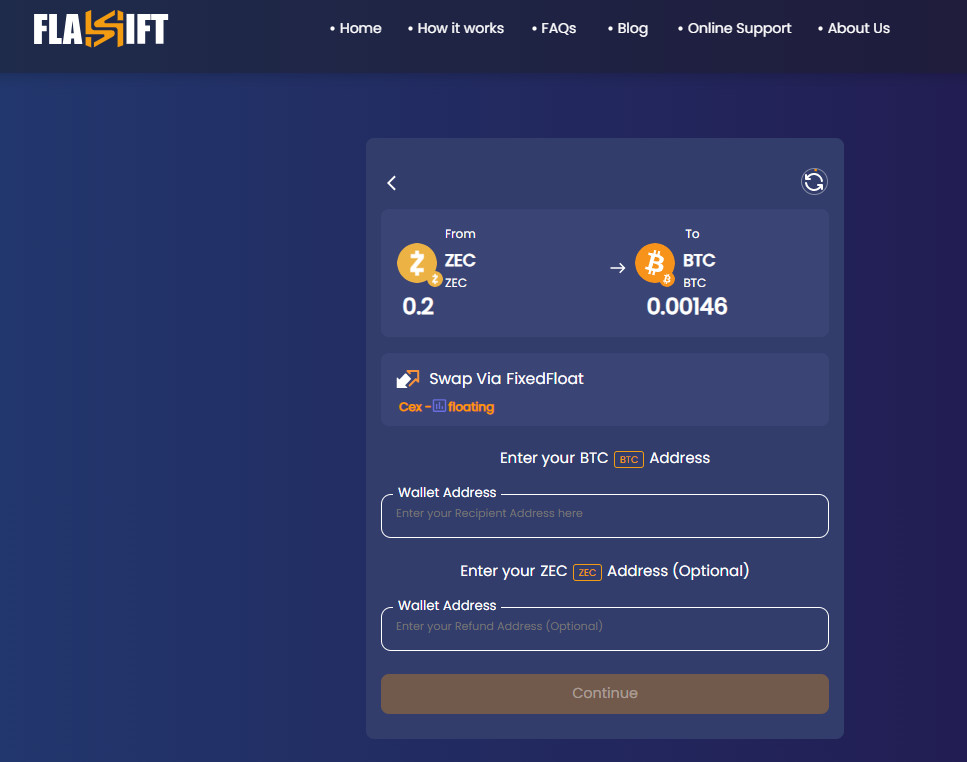
2. I choose swap From ZEC to BTC in the two drop-down boxes, and I type in the amount of ZEC I want to exchange in the type-in field. In the example screenshot, Flashift is suggesting FixedFloat is my best exchange option, and shows what the exchange rate and fees will be at current coin prices.
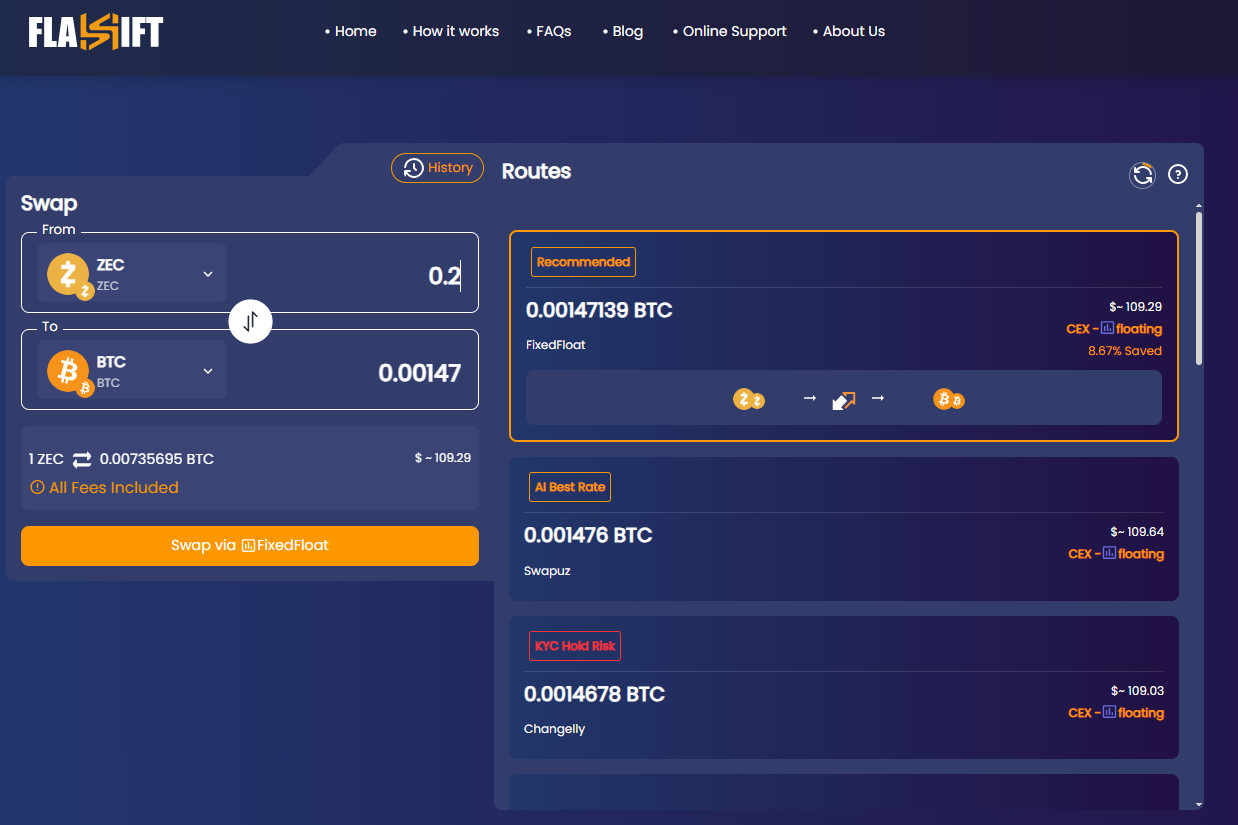
3. I hit the button “Swap via FixedFloat” to proceed, and it brings up the wallet screen. Here I paste my BTC wallet for the “To” address. I skip the ZEC wallet adress, and instead on the next screen a QR code is presented. Accessing the QR code with my ZEC wallet (I use Zodl) then gives me the option to authorize the transaction and proceed.
4. A few minutes later, the transactions have processed on the blockchains, and I have successfully turned some Zcash into some Bitcoin.